The Tea Shop on Gatoto Lane
Rael Nekesa Wamalwa didn't tell anyone things had gotten this bad. She just kept going — picking up whatever vibarua (casual jobs) she could find around Gatoto area in Mukuru, some days earning enough for supper, some days not, and saying nothing about it to anyone who might ask.
She'd left her marriage because staying meant watching her children go without while their father drank through whatever money there was. Leaving was the right call. It also meant she was now the only thing standing between her four children and hunger, with no steady income and no safety net; just her hands and whatever casual work Mukuru's informal economy happened to offer on a given day.
Her daughter Abigael, eleven and in Grade 7, was the one who finally broke the silence not to her mother, but to her teacher. Kids don't usually announce a crisis outright. It comes out sideways, in a tired comment, a slip in the middle of an ordinary school day. Abigael mentioned the empty house. The teacher picked up on it and didn't let it drop.
That's how the case landed with Catherine at Ruben Centre's Social Work Department. She didn't wait for a formal referral or a home visit to schedule assessments. She got maize flour and beans to the family within days, and made sure Abigael's school fees were covered so the crisis at home wouldn't cost her a term at school. It's not the kind of help that gets talked about much — nobody photographs a packet of flour — but it's the difference between a child staying in class and a child staying home.
Catherine could have stopped there. She wanted to meet Rael and not just manage her case. So she sent word home with Abigael: tell your mother to come see me. Rael came in expecting, probably, to explain herself. Instead Catherine asked her something almost nobody in her position gets asked: could you run a business, if you had the chance to try? Not "what do you need." Not a checklist of deficiencies. A question about what Rael could build.
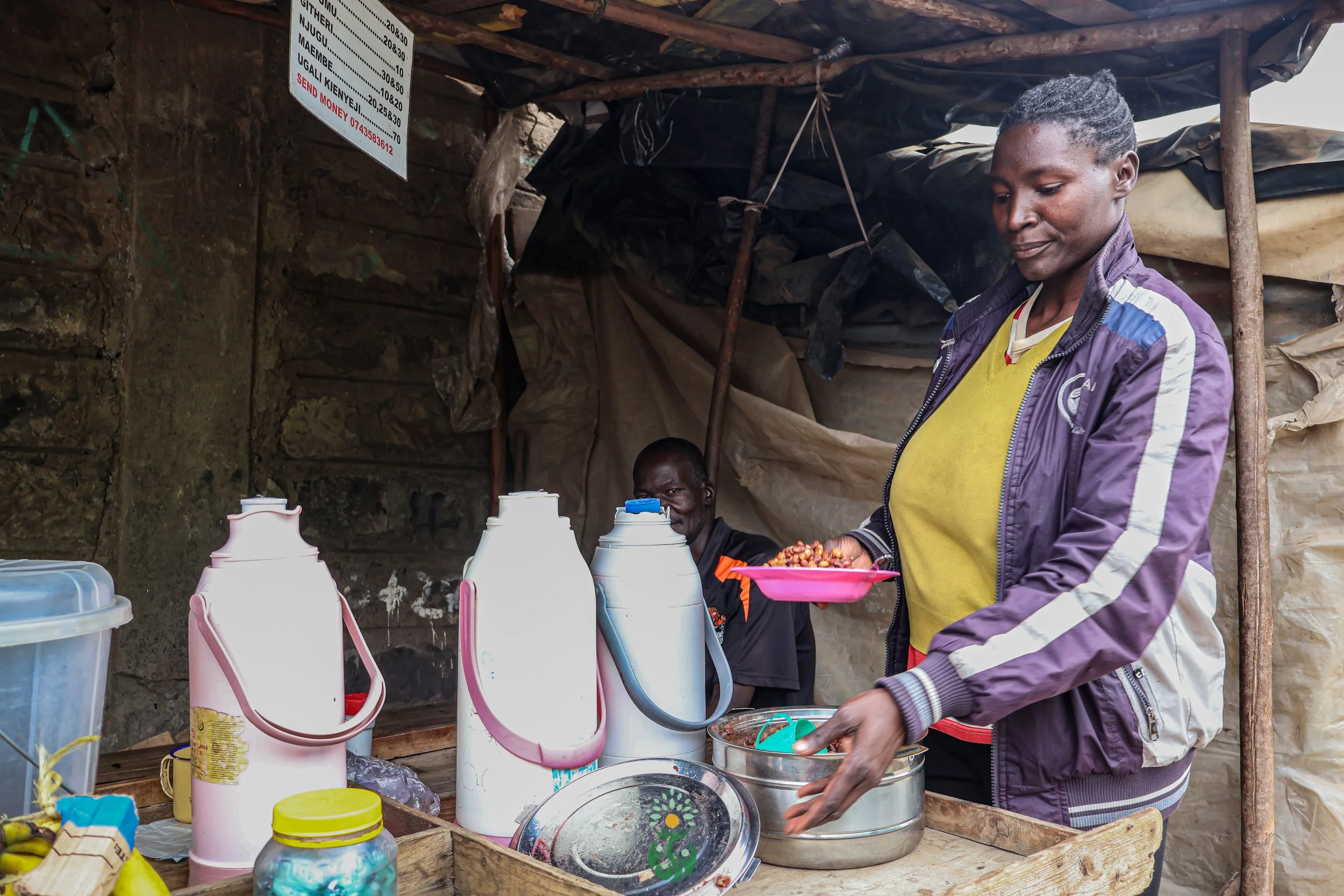
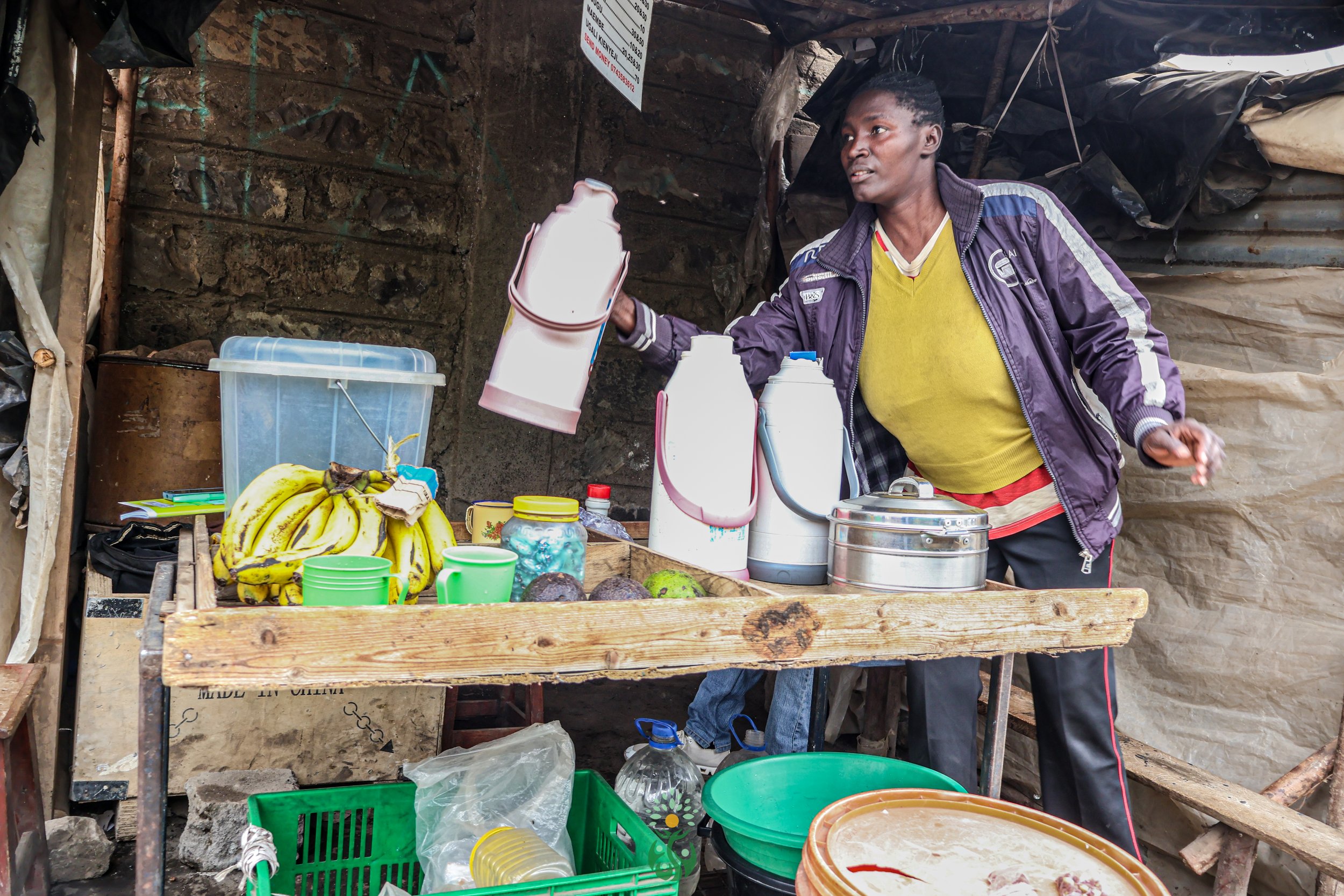
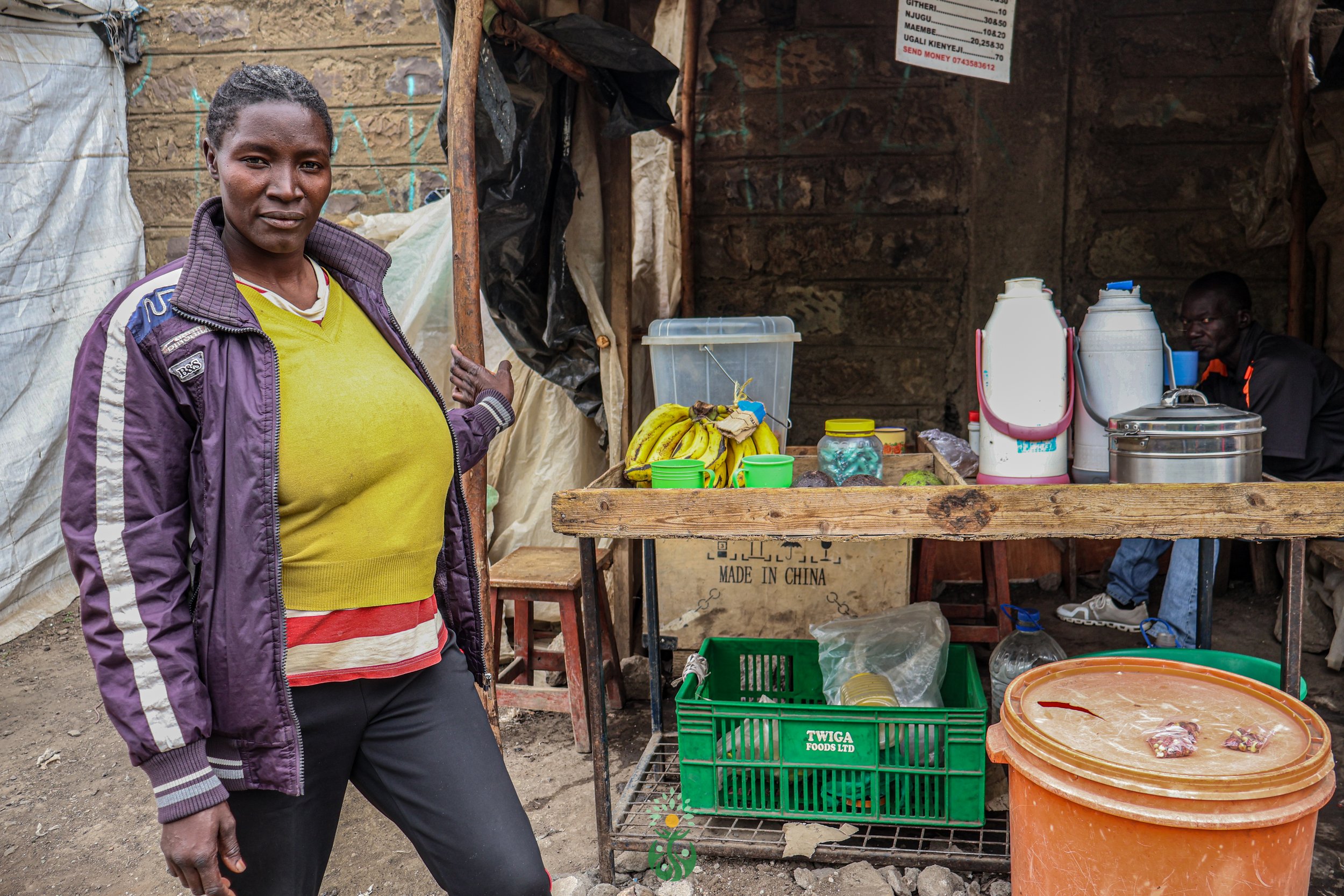
She went home to think about it and came back with an idea that made sense the moment she said it out loud: a small tea shop, right there in Gatoto area, selling hot tea, ngumu, and githeri to the neighbours who pass by every morning on their way to their own hustles. Ruben Centre put Ksh. 7,000 behind it. Not a loan she'd spend years repaying — start-up capital, the kind that says we believe this will work.
It's been three weeks. The shop is open six out of seven days. Rael is making enough to feed her two younger children at home and keep some money moving. It's not much by outside standards. For her, it's the first income in a long time that didn't depend on someone else deciding to hire her that day.
What made the difference for Rael's family wasn't one thing — it was that Catherine had food to give when they needed food, fees to cover when they needed fees, and capital to offer when what they actually needed was a way to stand on their own. Not every family Ruben Centre meets needs the same combination, or needs it in the same order. Some need it all in the same week. That kind of response — fast, flexible, matched to the actual shape of a family's crisis rather than to whatever programme happens to have funding that month — is exactly what a dedicated humanitarian fund exists to make possible.
Rael's other three children are still finding their footing with one at university, one in Form 3, one in Grade 4, and a toddler just over a year old who has no idea yet what his mother did to keep the household standing. What's changed is that their mother now has something of her own to build from, a small stove and a stool and a reason to open up shop every morning.
To Catherine and Magdalene at the Social Work Department, to the teacher who noticed what Abigael couldn't quite say out loud, and to everyone who makes it possible for a family in crisis to be met with a question instead of a judgment — thank you. Rael's tea shop is small. What it stands for isn't.
Stories & Photos By: John Kiarie
Edits: Gregory Barake